
Skip to content. | Skip to navigation

Sections
Personal tools
You are here: Home National Clearinghouse on Disability and Exchange Tipsheets Disclosing a Disability for an International Exchange Program

Disclosing a Disability for an International Exchange Program

Information and resources on the topic of disclosure for international exchange participants with disabilities, including when, why and what to disclose about your disability.

In this Tipsheet:

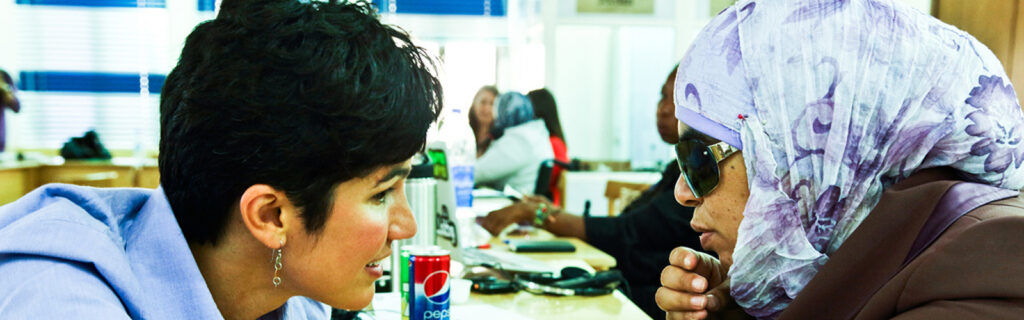
Photo: Author Franz Knupfer
Read personal insights in this blog post Should I disclose my disability?

Why should I disclose?

Benefits of disclosure

Disadvantages of disclosure

To whom should I disclose?

When should I disclose?

What to disclose

Disclosure for international students and exchange participants coming to the USA

Useful links and resources

Why should I disclose?

Disclosure is the act of sharing personal information about a disability with others.  It is not required to disclose a disability when going on an international exchange program unless you plan to request accommodations. If you need accommodations or are concerned about full inclusion in a program, program policies may require that you submit documentation of your disability. You may also choose to disclose your disability for other reasons as well, such as to share information staff may need to act safely and quickly in case of an emergency during the program. This tip sheet covers the why, when, what and who of disclosure.

Benefits of disclosure

There are many advantages to disclosing a disability, including:

  • Advance preparation for your disability-related needs, including learning about available disability-related access or services as well as arranging or requesting reasonable accommodations in a timely manner from exchange staff. Exchange professionals encourage students to disclose as soon as possible so that they can organize necessary logistics and accommodations, ensuring that you have a meaningful, rewarding and safe experience. To learn more about disclosure from a professional perspective, go to Disability Disclosure and Study Abroad: Understanding the Issues.

“One of the things I did [for my Peace Corps application was] prepare a video I titled ‘A Day in the Life of Christa Bucks.’ The video helped Peace Corps get to know me in terms of my interests and abilities as well as how I live on a daily basis. I went through my independent living skills, and I also showed them some of the work I was doing as a facilitator on a ropes challenge course. After that, I persistently followed up and that was the key to my success.” Christa Bucks Camacho learned that communicating openly about her mobility disability was essential to joining the Peace Corps.
  • Legal protection against discrimination when in the United States through the Americans with Disabilities Act (ADA). This protection includes the application process for programs based in the U.S.
  • Connections with people in the host community with similar disabilities or to the community of people with disabilities as a whole. You can also find allies within program and disability services offices, the community of people with disabilities, and teachers, administrators and program staff to direct you towards resources such as funding, accommodations and disability organizations.
  • The opportunity to increase disability awareness, reverse negative stereotypes, and present positive models of disability to others.
  • Reduction in stress that may come with trying to hide a disability, or in worrying who might assist if in a disability-related crisis situation.
  • Be proactive about self-advocacy and communicate personal preferences and needs to those around you.

Disadvantages of disclosure

There are also disadvantages to disclosing a disability, including:

  • The possibility of facing discrimination and stereotyping.
  • Others discouraging your participation in certain programs or trying to dissuade you from visiting certain destinations, which may not be based on valid reasons.
  • Exclusion as a result of a disability, even if such exclusion is illegal.
  • A personal preference to keep disability private.
  • Concerns that insurance might deny coverage for pre-existing disability-related conditions.
  • You may not identify as a person with a disability or need accommodations.

To whom should I disclose?

Lauren Presutti in Australia


“To prepare, I did extensive research on my own, as well as with coordinators of the program to arrange the accommodations that I need. As with all new adventures, it has been interesting to work through this process together with them, and it has been a new learning experience for everyone.” Lauren Presutti, who uses a power wheelchair, studied abroad in Australia.

International student services and program advisors on campus and at provider program headquarters: Advisors may have suggestions or resources that can direct you towards finding a program or opportunity that works best for you. This can be helpful during the planning period before you depart for your international exchange experience. They also may be in charge of coordinating accommodations abroad. International travel health insurance providers may also have useful information on traveling with medications, finding doctors, and covering your needs abroad. For more information, see Insurance Considerations for Exchange Participants with Disabilities.

Disability Support or Counseling Services: Most universities in the U.S. and Europe have disability support offices or psychological counseling services on campus or in the community. These services are in place to provide services and accommodations for students and other people with disabilities. Disability or counseling staff can also act in an important role to advise exchange program staff about support services or disability accommodations, institutional policies, and local laws. If you have a vocational rehabilitation or social security counselor, you can also talk with them about Social Security or Vocational Rehabilitation and Going Abroad.

Program Field Staff: If you need accommodations, whether in the classroom, the field, or elsewhere, you may want to talk directly with your program leaders, teachers and guides. This could include the program leaders traveling with you or based in the host country. This gives you the opportunity to clarify the accommodations you need or to discuss informal accommodations.

Host Family or Roommates: Informing your host family or roommates about your disability may make it easier to arrange informal accommodations. Families or roommates may be willing to assist you and may also be more understanding of your personal needs if they know about your disability.

Peers and other participants: You may wish to disclose your disability to your peers for a variety of different reasons, both personal and practical. They may be able to assist with informal, impromptu accommodations. However, this can be a sensitive situation if other students feel obligated to assist, or if the assistance is significant or frequent. In this situation, it may be a good idea to hire a personal assistant, and a fellow classmate may be open to an arrangement. For more information on hiring personal assistants, see Personal Assistants on International Exchange Programs.

Kathleen Coleman in Spain

“If I had the opportunity to experience my time in Barcelona over again, I would like to have had a question and answer session with all of the students in my group who did not have a disability. I feel that they would have been more comfortable around me, and I around them. They would have known that I was different - but in a very good way!” Kathleen Coleman, who has Aspergers, spent four months studying in Barcelona, Spain.

When should I disclose?

Individuals with disabilities can choose to disclose any time during the process of applying for, enrolling in, or attending a program or international exchange experience. You can also choose not to disclose your disability at all. However, keep in mind that self-advocacy and communicating your needs are important tools for success. According to U.S. non-discrimination law, programs cannot ask about nor consider disability status during the application process.

You can disclose your disability before the application process. You may wish to contact program administrators or advisors to find out whether or not a program is fully accessible and how straightforward or complex it might be to arrange and fund necessary accommodations. If you do this, it’s a good idea to also do your own research or contact our staff at the NCDE for assistance, as program advisors and administrators may not always have comprehensive information or creative ideas around barriers. If you are concerned about potential discrimination, wait until after you are accepted or ask questions in a way that is not connected to disability reasons, the admissions process, or your name.

You can disclose your disability during the application process. Some programs may specifically encourage individuals with disabilities to apply, and disclosure can make your application stronger. For example, the Fulbright Program is actively looking for a diverse body of Fulbright grantees, including participants with disabilities. You may feel that you wish to write about your disability in an application essay, particularly if you believe it will be an asset to the program for which you are applying. In general, if you believe disclosing your disability will make your application stronger, it is a good idea to mention it. If you think disclosing your disability during the application process wouldn’t benefit your application, you may want to wait until you have been accepted to the program to disclose your disability.

Photo: Zach with African child

"I let the volunteer program staff know I take medication twice daily, so they would have medication bags for everyone and I’d go and get it at morning and at night. They were all pretty understanding – most were run by Americans so most had experience in the past dealing with issues. They gave me tips on how to cope with things." Zach, who has social anxiety and depression, spent a Gap Year: Volunteering Around the World

You may be required to disclose your disability as part of a medical clearance process. Medical or disability accommodation forms may be provided with the application packet or with acceptance forms. Programs can evaluate an individual’s physical and mental fitness for participating in the essential functions of an exchange program, and require it as a condition for participation.  This may include an examination by the program’s medical staff or a form signed by your doctor or other medical practitioners. These forms are usually reviewed after you are conditionally accepted in order to determine if you can be placed in the program.

In some cases, your disability may not have a bearing on your general health, and it may be necessary to make this difference clear to administrators during the medical clearance process. The medical reasoning affecting your participation must be evaluated using factual information and be considered in balance with your other relevant skills or experiences. To learn more about screening from a professional perspective, go to Screening: Implications for Students with Disabilities in Education Abroad.

You can disclose your disability after you have been accepted for a program but before you go. If you choose not to disclose your disability during the application process but plan to request disability accommodations, this is the best time to disclose your disability. By giving advisors and organizers as much time as possible to plan for your arrival, they can more effectively provide accommodations so that you can transition into your program smoothly. If this process is delayed, unexpected barriers related to disability access may postpone your participation in the program.

You can wait until you start your program or classes to disclose your disability. If you know that you will need accommodations for your program, this course of action is not recommended. By this time, it may be too late to arrange accommodations, especially complex ones. However, disclosing during your program may be necessary if unforeseen issues arise or if your disability status changes. This method may also work if you plan to informally ask program administrators, your host family, or professors for accommodation.

Even if you do not plan to request accommodations, you may wish to disclose to reduce stress and make the process easier for yourself if unforeseen needs arise.

By informing staff about your disability history, for example, they may be able to better assist you in an emergency situation. Keep in mind that if you wait until you have reached a crisis point to disclose, you cannot use your disability status to retroactively get accommodations. For example, if your disability causes you to miss an important assignment but you do not disclose your disability beforehand, your professor can still give you a failing grade on the assignment.

Funding, arrangements for staffing or equipment, and approvals for medications or insurance can take a considerable amount of time. In the past, students and others with disabilities have had to delay or even cancel their exchange experiences because there wasn’t enough time to arrange accommodations. This process can cause tremendous stress for exchange staff, hosts, your family and you. For these reasons, it is generally not recommended to wait until your program begins to disclose a disability.

You can choose not to disclose your disability at all. If you do not need specific accommodations, you can choose not to disclose your disability. Remember, you are not legally required to disclose your disability at any time.

What to disclose

It is up to you to decide how much information you want to disclose about your disability. If you are requesting accommodations, you are only required to provide documentation that shows the accommodation is needed and you do not need to disclose your disability. If you choose to disclose your disability, you may want to include the following information:

  • General information about your disability
  • Your reasons for disclosing
  • Accommodations that have been effective for you in the past as well as equipment and medication you will be bringing abroad
  • Accommodations you may need for the program. You should be specific in noting preferred equipment and accommodations as well as basic (though possibly not ideal) alternatives that could work in situations where preferred options may not be available.  See Assessing the Disability-Related Needs of Exchange Participants for more information on accessing and determining accommodations.

Disclosure for international students and exchange participants coming to the USA

Fulbrighter, Andrey Tikhanov, from Russia

“I had a strong desire to experience a new culture and embark on a new life, but I knew that everything would be completely different from what I was used to…Fortunately, before I left Russia, my future supervisor at Michigan State University and staff from the MSU Resource Center for Persons with Disabilities (RCPD) emailed to ask what types of assistance and assistive technology I would need, and helped me address some of my many concerns.” Andrey Tikhonov, who is blind and from Russia, spent ten months teaching at Michigan State University as a Fulbright Foreign Language Teaching Assistant (FLTA).

International students coming to the United States should be aware that American laws protect them from discrimination due to disability. In addition to having the right not to disclose a disability, students are also protected by laws that protect confidentiality. For example, if a student chooses to disclose a disability to a disability services office at a university, staff in the office must keep that information private. In some cases, if your disability can clearly result in harm to yourself or others, information will be shared with only those individuals who need to know to assist in keeping you and others safe.

In many countries, disability accommodations are arranged informally, often through family, friends or the community. This is generally not the case in the United States. In the U.S., accommodations are often arranged formally, which generally involves a request in writing as well as paperwork. In other words, accommodations and assistive devices can only be provided if a disability is officially disclosed to the disability or program staff and approved. It is necessary to disclose your disability well before the program begins so that accommodations can be made in time. This is also true if you need accommodations when taking any required English Proficiency Test or other standardized tests.

Useful links and resources

For more on disclosing a non-apparent disability, see: Let's Talk About Your Disability: Issues of Disclosure.

For more information on disclosure from a professional perspective, see: Disability Disclosure and Study Abroad: Understanding the Issues.

Document Actions